The browser is just the doorway. The more useful question is what you want to decide between logins: where to invest, how far to expand, when to defend, or who to coordinate with. Those choices create very different rhythms, even when games share a genre label.
Imagine a reserve large enough to improve one mine or start a fleet, but not both. The mine broadens your options later; the fleet gives you a way to act sooner. That simple trade-off is enough to show what you enjoy: preparing tomorrow’s options or being ready to move now.
Choose the decision loop before the setting
An interesting upgrade opens one possibility and puts another on hold. Production can fund research, ships, or expansion, so today’s spending changes what becomes possible next. When opponents share the world, timing matters too: saving resources for a quick response may be more valuable than maximizing output.
OGame is a familiar reference point for this space-strategy loop: planetary development, research, fleets, and conflict feed into one another. Ask whether tying the economy to progression and military decisions sounds appealing. If you would rather build at your own pace, the amount of competition matters more than whether the setting is medieval or in space.
As a game designer, I look at the handoff between decisions: does one action change the next choice? Research may open a new approach; a building can support a longer plan. When choices mostly mean waiting for a meter to fill, steady growth may be the main pleasure. Neither approach is wrong, but they reward different kinds of patience.
Consider what happens while you are away
“Browser-based” describes how you get in, not how often a game expects you back. In a persistent world, time can keep moving after you close the tab: a build finishes, production accumulates, or another player acts. Those events do not all have the same consequence. Absence becomes part of the rules when the choices you make before logging off change what you return to.
Try the question with the fictional mine: has production moved your plan forward? Is a fleet still out? Is the next decision clear, or do you feel you have to check in constantly? A world that keeps moving can make preparation meaningful, but a permanent deadline can turn play into an appointment.
Forge of Empires is available in a browser and as an app, but changing devices does not tell you whether its pace will fit your routine. Our guide to mobile strategy games looks at that question from the phone-first side.
Decide how much other people belong in the plan
An alliance changes the scale of a decision. Shared resources or reinforcements can turn an individual defense into a group plan; a coordinated attack asks when and with whom to act. On regular Travian: Legends worlds, alliances work toward a World Wonder endgame. Special versions can use different goals, so the game world itself is part of the comparison.
The mechanic gives you options; it does not dictate your habits. The same reinforcement feature might support a quick favor or a carefully timed operation. Ask how often a group expects coordination, and how much of your play you want to tie to shared timing. If you prefer to choose your own return schedule, the alliance you join may matter more than the theme.
Look at what spending speeds up
“Free” describes the price of entry; it does not explain what a purchase changes. Travian offers Gold features that temporarily boost resource production, while Forge of Empires lets players use Diamonds to speed up research. One changes a resource flow for a while; the other shortens a progression wait.
That difference does not settle whether either game is balanced. Instead, look at what an optional purchase does to your next available choices, and whether an interesting path remains open without it. In a shared world, its effect on timing matters as much as the bonus itself.
Look at an actual decision in Aleryos
Aleryos connects a planetary empire, space missions, ground operations through the Pillars, and alliances that can develop shared technologies. The appeal is the link between long-term development and decisions on more than one front. It may suit players who like moving from an empire upgrade to a military choice; it may feel like too much if what you want is a self-contained solo campaign.
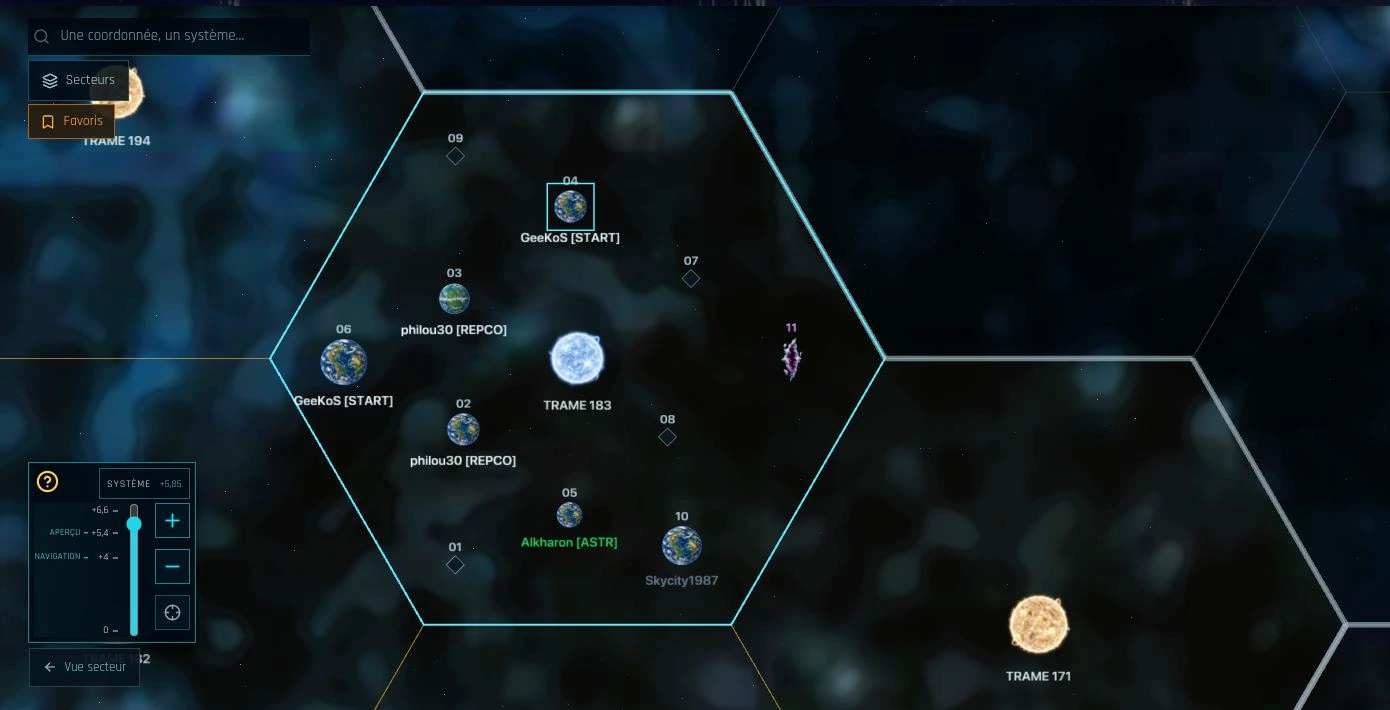
The current map view, shown in French, places planets around a star system. That helps make the geographic side of the loop concrete: your empire has positions among other worlds, not just a list of upgrades.
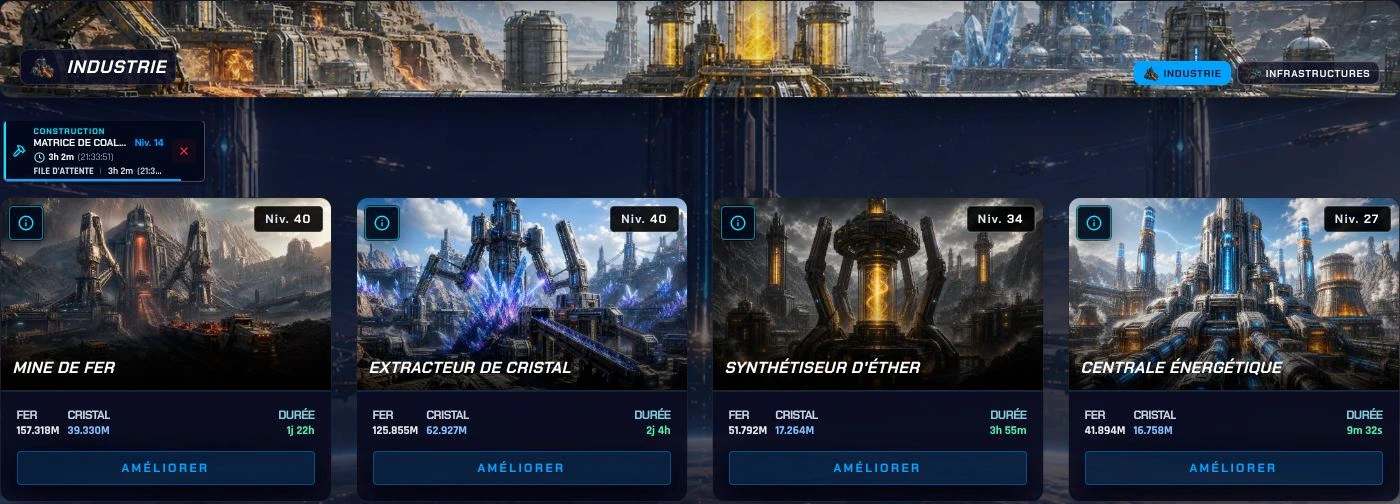
The Industry screen is also shown in French. Its listed costs and upgrade durations make the economic trade-offs visible: you can compare what to improve next before committing resources.
If these are the calls you enjoy making, discover Aleryos. If not, keep three filters for your next browser strategy game: the decision you repeat, what changes while you are away, and how much other players shape it. Playing in a browser skips the install step; the game itself still has to make you want to return.