
Looking for a game like OGame? Aleryos shares the appeal of growing planets, planning fleets, and building an empire over time, but several core decisions work differently. It is a multiplayer space-strategy game that runs in your browser, with an Android app also available. You design ship models, project ground forces through the Pillars, develop faction skills, and help fund shared technologies with your alliance. This guide compares those systems so you can decide whether the changes suit you; Aleryos is not an OGame clone.
OGame and Aleryos at a glance
Both games ask you to develop an economy, expand your reach, and organize forces. Similar goals do not mean identical tools:
| If you want to… | In OGame | In Aleryos |
|---|---|---|
| Plan a fleet | Choose from ship types with defined roles, then build a composition around the target. | Choose a ship infrastructure and its components, then combine the resulting models into a fleet. |
| Colonize | Send a Colony Ship. | Project a ground team through the Pillars; colonization follows Aleryos’s ground-operation rules. |
| Take on PvE | Send an expedition, which can return resources, ships, or a hostile encounter. | Choose Errant targets, prepare Archaeological Excavations, and take part in events. |
| Coordinate with others | Organize alliance play, including synchronized ACS attacks. | Coordinate diplomacy and fund shared alliance technologies with token donations. |
This is a comparison of selected mechanics, not a complete account of either game. For OGame’s ship roles, see Gameforge’s official OGame ship guide.
Design ships around tradeoffs
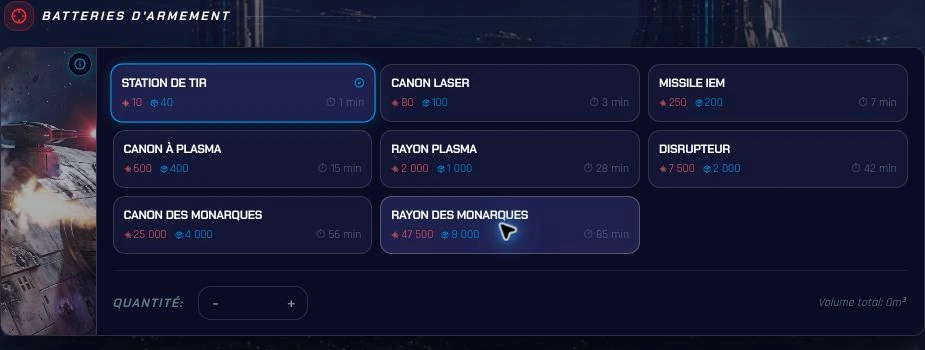
In OGame, the central choice is which ship types to build and how to combine them. In Aleryos, ship design starts earlier: you create the models your fleet will use. Choose an infrastructure, then add weapons, hulls, shields, and reactors within its volume limit. Every component takes space away from cargo capacity.
That makes fleet planning a question of how models support one another. A heavily equipped ship may leave too little room for mission cargo or fuel, so it can need a companion vessel for logistics. The aim is not to maximize one model’s stats in isolation, but to build a fleet whose parts work together.
The Pillars add a ground front
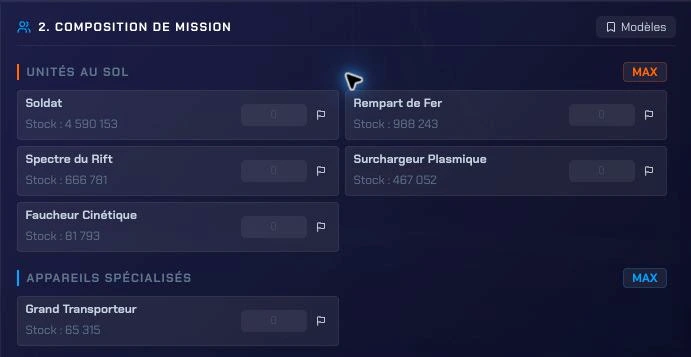
If you would rather develop ground forces than focus only on fleets, the Pillars offer a second strategic path. They support ground missions such as attack, transport, espionage, colonization, and exploration. You can specialize in ground operations or combine them with ships; the two systems serve different purposes.
Colonization is one of the clearest differences from OGame. Aleryos does not send a Colony Ship to create a world: it uses a Pillars operation with a ground team. The route and rules are specific to the Pillars, so do not assume that an OGame colonization plan transfers directly.
A different mix of PvE and progression
OGame expeditions can produce uncertain outcomes, including resources, ships, or hostile encounters. Aleryos offers other kinds of PvE activity: Errants are non-player opponents, while Archaeological Excavations send a ground team to a site in search of rare resources or accessory fragments. An Excavation can awaken a hostile presence, and once launched it cannot be recalled manually. Events add occasional objectives alongside those missions.
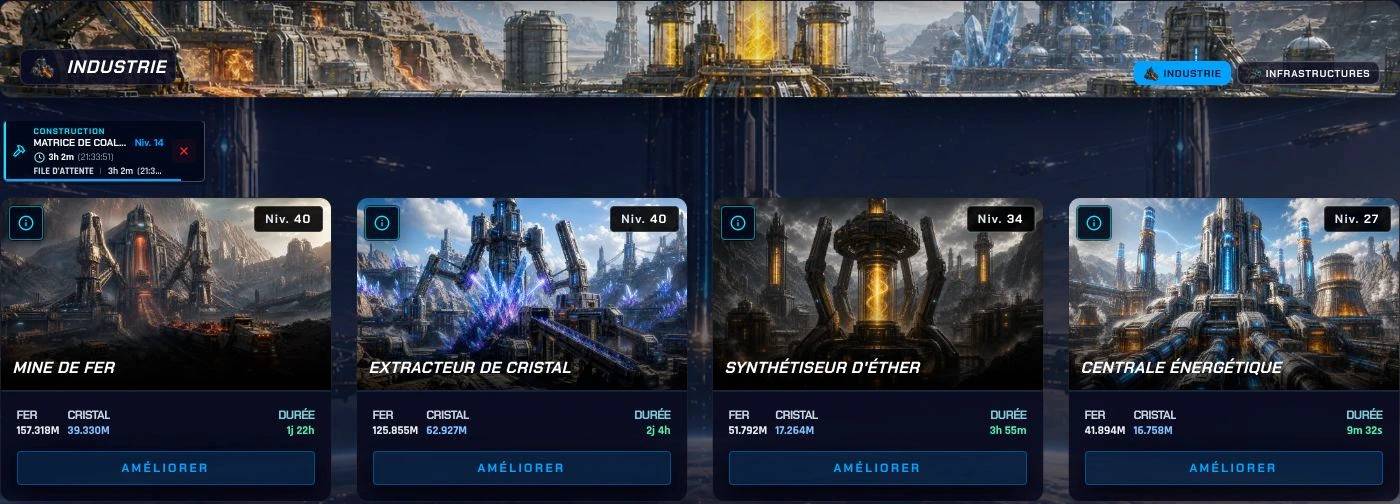
The planet-building layer matters too. Mines, energy, shipyards, and research support the growth of an empire before and between military operations. The current Industry screen shows the costs and construction times for planetary buildings, rather than their production rates; its labels are in French.
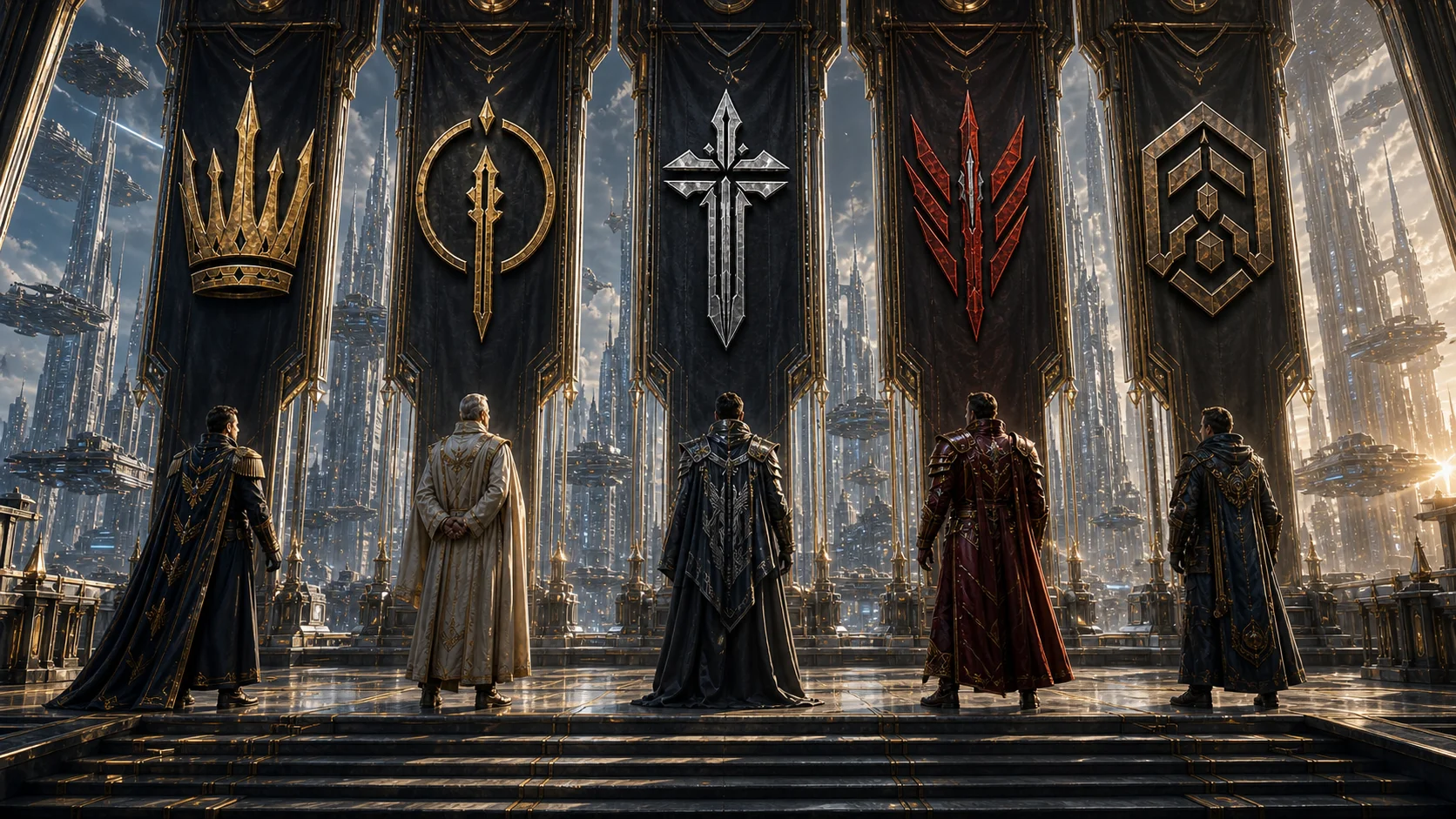
Faction progression adds another choice. Your empire follows one of five human doctrines: the Solarian Crown, Luxian Directorate, Veridian Conclave, Ferrenne Legion, or Helioris Syndicates. Each faction has its own skill tree. Choosing a faction does not grant every bonus immediately: you buy skills, while faction experience advances your grade and opens higher skill tiers.
Alliance progress is a group decision
OGame’s ACS lets alliance members synchronize fleets for a shared attack. In Aleryos, alliances also choose and fund shared technologies. Members donate tokens toward a threshold; once it is reached, an authorized member must launch the upgrade. The technology’s bonus becomes active for the alliance only after the upgrade is complete. Reaching the threshold alone does not start it.
An Aleryos alliance organizes player relationships through ranks, permissions, discussion, diplomacy, and pacts. A faction is different: it is your empire’s doctrine and personal skill progression. If you want more detail on the group side of play, read our guide to alliances in strategy games.
Is Aleryos the right alternative for you?
Aleryos may suit you if you enjoy growing an empire while designing fleets, expanding through ground operations, developing faction skills, and funding shared technologies with your alliance. If you mainly want OGame’s familiar ship roster and established strategies, those are not Aleryos’s promise. It shares some foundations of the space-strategy genre, but uses its own rules.
PvE does not make Aleryos a solo or offline game. It remains a multiplayer universe with player interaction and PvP; Errants, Excavations, and events add activities alongside that competition.
If that mix sounds appealing, start building your empire in Aleryos.